What is cognitive AI?
Lorem ipsum is placeholder text commonly used in the graphic, print, and publishing industries for previewing layouts and visual mockups.

Unlike traditional AI systems, which often rely on set rules, cognitive AI is designed for more complex tasks. It can interpret intent and provide guidance in situations that require context or nuance, such as managing conversations or assisting with clinical decisions.
Cognitive AI systems are built using techniques such as machine learning and natural language processing. By learning from large volumes of real-world data, they can refine their responses and improve over time.
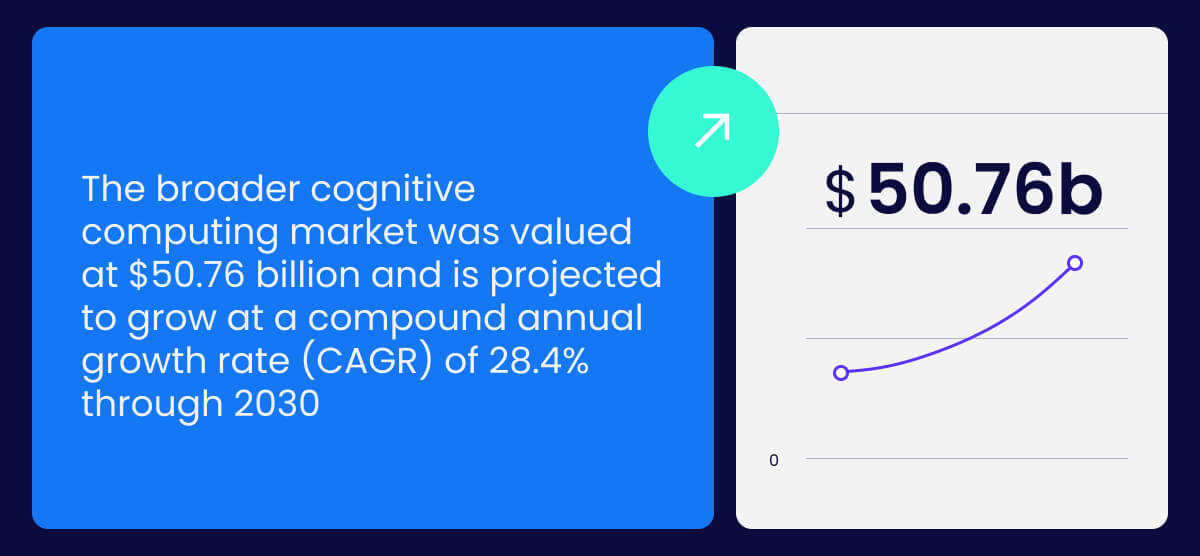
The value of cognitive AI is growing rapidly as part of the broader cognitive computing market. In 2024, this market was valued at $50.76 billion and is projected to grow at a compound annual growth rate (CAGR) of 28.4% through 2030. This growth reflects increasing demand for systems that can understand, reason, and adapt in real-world environments.
How does cognitive AI work?
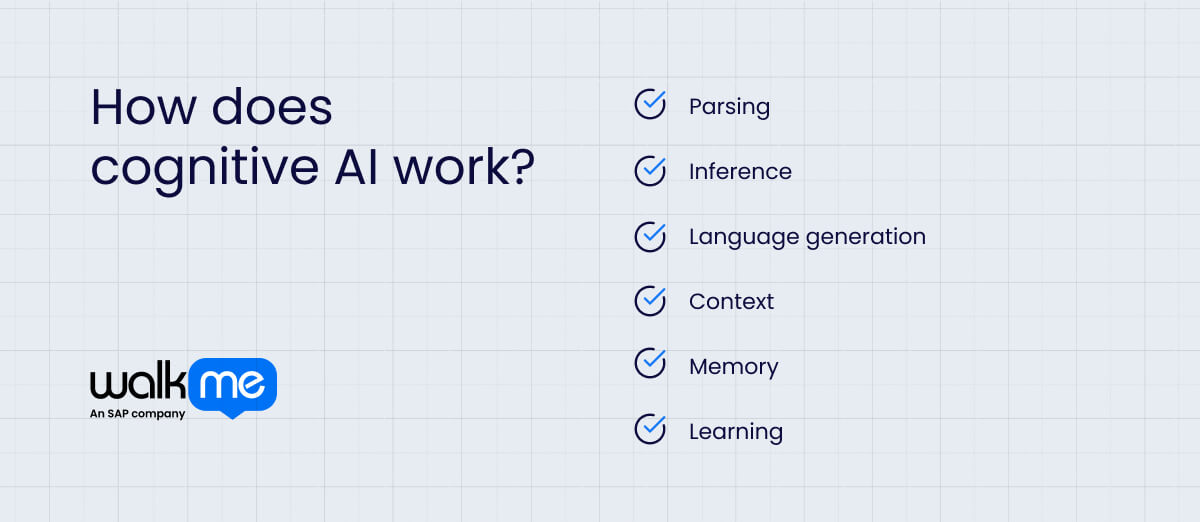
Cognitive AI is designed to understand and respond to people in a way that feels natural, closer to how someone would process language and identify the underlying meaning before responding.
Below is a breakdown of how it works during an interaction, followed by how the system learns and improves over time:
Parsing
The AI begins by breaking down the user’s input into smaller parts to interpret. It analyzes keywords and sentence structure to understand meaning. Some systems can also assess tone or sentiment when they are designed to handle emotional context. For instance, when someone types “I’m looking for a new role that fits my strengths,” the system recognizes it as a job search query and flags terms like “role” and “strengths” as important.
Language generation
After interpreting the input, the system generates a response using natural-sounding language. Rather than pulling from a script, it forms replies based on the conversation’s flow and the user’s intent. Many cognitive AI tools use large language models to generate responses that feel more natural and human-like.
Memory
Some systems are designed to retain information across multiple sessions. For example, if a user has previously expressed interest in remote tech jobs, the system may use that preference to tailor future suggestions. Memory features are typically optional and depend on user consent and system configuration.
Inference
The system goes beyond the literal meaning of words, using patterns from training data to infer the user’s intent. If someone mentions feeling stuck in their current role, the AI might infer a desire for change, even if it isn’t stated explicitly.
Context
Cognitive AI tracks the entire conversation to maintain relevance. This process, known as contextual AI or dialogue management, allows the system to connect follow-up questions to earlier topics. For instance, if a user asks, “What about the pay?” after discussing nursing jobs, the system understands the question refers to healthcare salaries.
Learning
Improvement happens outside of individual conversations. Cognitive AI systems learn from large volumes of historical data, identifying common patterns in how people express goals or ask questions. Training takes place before deployment, but ongoing updates based on new data or feedback help the system improve accuracy and performance over time.
Generative AI vs. cognitive AI
Understanding how cognitive AI works can sometimes lead to confusion with another popular type of artificial intelligence: generative AI.
Both are designed to interact with humans and use similar technologies like natural language processing.
However, their goals and functions are quite different:
- Generative AI: Produces original outputs, such as writing a paragraph or designing a graphic, based on what it has learned from data.
- Cognitive AI: Focuses on having helpful conversations by understanding what people mean and adjusting responses based on the situation.
| Row headers | Generative AI | Cognitive AI |
|---|---|---|
| Function | Creates new content based on a user’s input | Helps people make decisions through conversation |
| Context of use | Commonly used for tasks such as writing support or coding | Often used in scenarios including support chats or healthcare advice |
| Advantages | Quick and creative in generating useful material | Can follow a conversation and respond in a relevant way |
| Limitations | May lose track of context or forget previous conversations | Less suited to tasks that require detailed content generation |
| Typical users | Students, marketers, software teams | Customer service teams, recruiters, medical staff |
Cognitive AI use cases
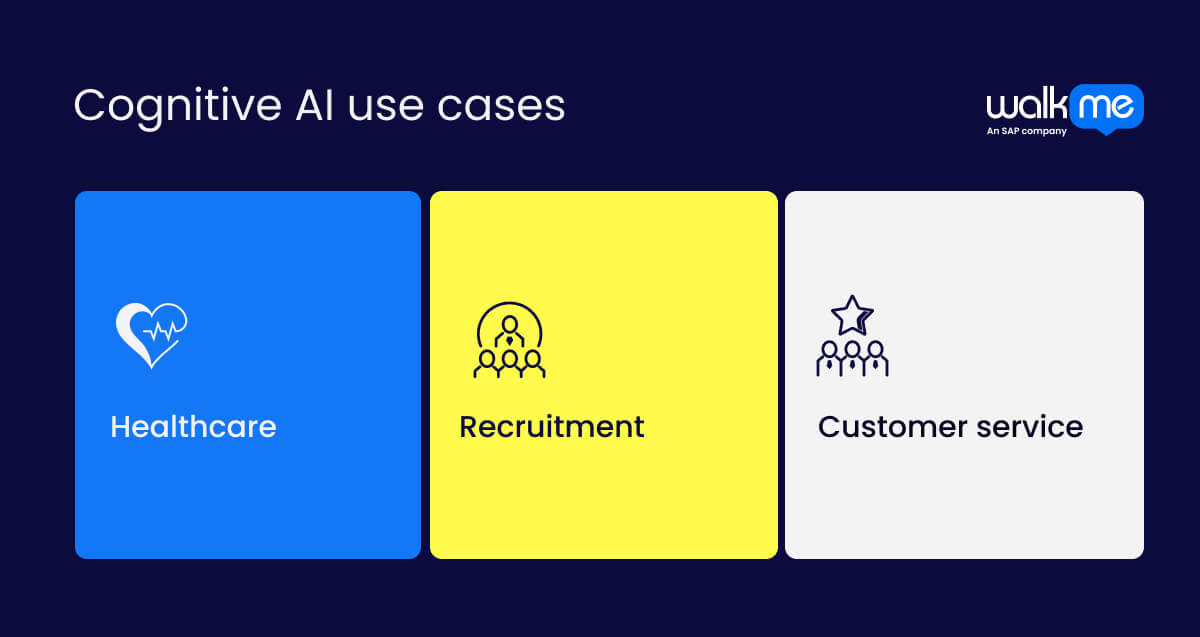
Cognitive AI is used in settings where a system needs to guide people through interactions that involve uncertainty or evolving goals, similar to how a digital adoption platform guides users through complex software.
Here are three examples of how cognitive AI is used in the real world:
Healthcare
Medical staff often need to make sense of information that arrives in fragments. A patient may describe symptoms without using clinical terms or share details that don’t point clearly to a single cause. Cognitive AI tools can connect patient input with relevant medical records or published guidance, offering suggestions that clinicians may not immediately see.
Recruitment
Some hiring platforms use cognitive AI to hold initial conversations with job applicants. These tools can respond naturally when a candidate pauses or shifts topic unexpectedly. They are designed to listen for meaning rather than just keywords, which allows hiring teams to build a fuller picture of the person behind the application.
Customer service
In support settings, cognitive AI is used to manage conversations that do not follow a standard script. A customer might refer to a previous complaint without repeating the details, or express dissatisfaction through tone rather than words. Cognitive systems can recognize these signals and adjust their responses accordingly.