What is performance improvement?
Performance improvement in a business means finding ways to make the business work better. It’s about spotting areas where things could run more smoothly or where changes could help save time or money. For example, it could involve improving products or services, helping employees work more effectively, or keeping customers happy.

To improve, businesses often examine how well employees do their jobs, the tools they use, and how teams work together. They might train employees to improve their skills, introduce new tools or software, or change the way things are done to make tasks easier and quicker. Companies often set goals and use numbers, like tracking sales or customer feedback, to check if these changes are helping.
Some methods can help businesses improve. One example is the A’BA model. This model helps businesses see how well they are doing and find ways to do better. It asks experts for their opinions and combines the information with a decision-making method. After getting the feedback, the model gives clear steps to help the business improve.
Although changes from BPI can be big, the goal is not just quick results—it’s to help businesses grow steadily and keep improving over time. By constantly improving, a business can keep up with changes and do well in the future.
What are the key steps involved in performance improvement?
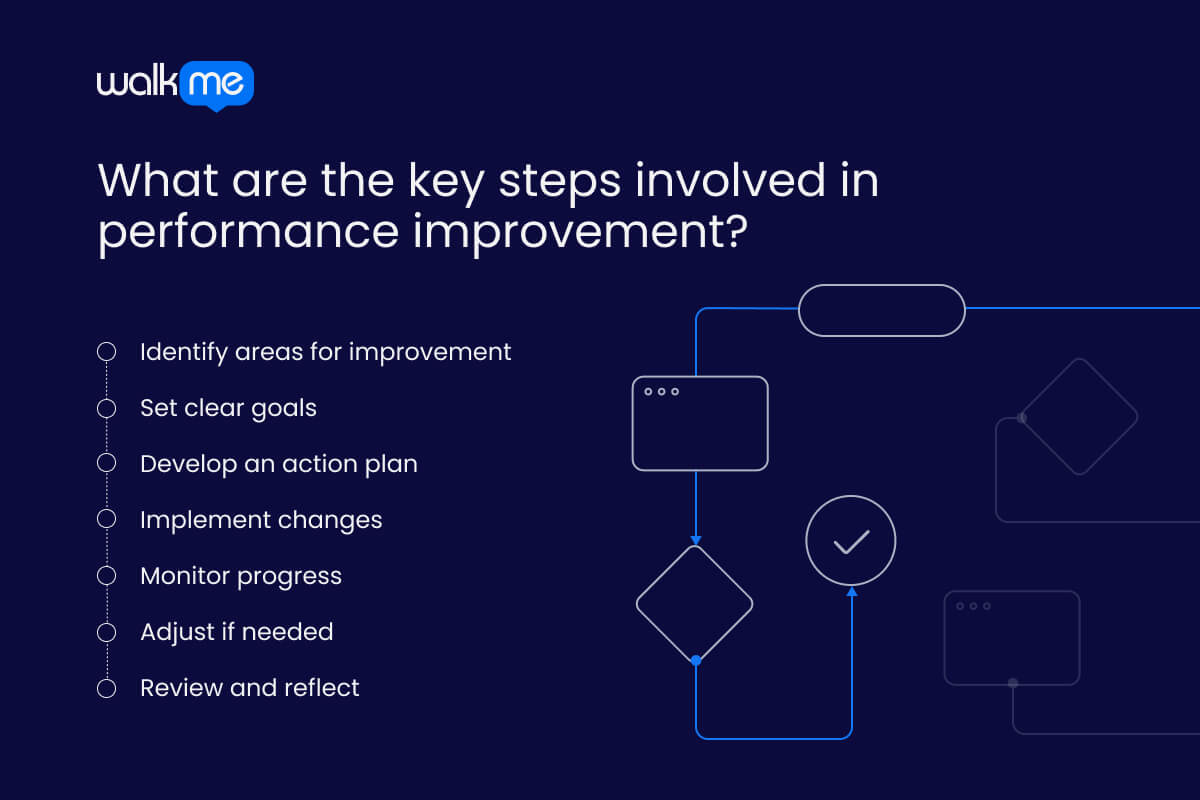
Knowing the main steps in performance improvement helps a business get better at what it does. Each step is important, from finding what needs improving to setting goals, making a plan, and checking results.
Let’s look at the main steps in performance improvement and see how they help a business grow and succeed.
Identify areas for improvement
First, the business needs to examine where it can improve. They might listen to customer feedback, analyze sales, or review how work gets done. It’s about spotting specific areas that could be improved.
Develop an action plan
With goals in place, the next step is to create a plan. The plan outlines what needs to be done, who will do it, and what resources are needed. It serves as a step-by-step guide to reach the improvement goals.
Monitor progress
As changes are made, the business tracks progress to see if goals are being met. Often, checking numbers like sales, costs, or customer feedback will reveal whether the business is achieving better results.
Review and reflect
After achieving the goals, it’s important to review what worked well and what didn’t. Reviewing past actions can help the business learn for the future and make performance improvement an ongoing process.
Set clear goals
Once the areas for improvement are found, the business sets clear goals. These goals need to be realistic, specific, and measurable. For example, a goal could be to reduce costs, improve product quality, or increase customer satisfaction.
Implement changes
At this stage, the business puts its plan into action. Employees might start new ways of working, get new tools, or receive training. Following the plan carefully is essential for everyone involved.
Adjust if needed
If the changes aren’t working as expected, adjustments to the plan can help. Flexibility keeps the improvements on track and allows the business to respond quickly to any problems.
Performance improvement vs. quality improvement vs process improvement
Performance improvement, quality improvement, and process improvement all help make a business better, but they focus on different things.
- Performance improvement looks at improving how well the whole business works.
- Quality improvement focuses on making products or services meet high standards.
- Process improvement looks at making specific tasks or steps easier and faster.
Let’s look closer at the differences between these three term:
| Row headers | Performance improvement | Quality improvement | Process improvement |
|---|---|---|---|
| Definition | Helping the business work better overall. It’s about doing things faster, using fewer resources, and getting better results. | Making products or services better so they meet or go beyond customer expectations every time. | Improving the steps in how things are done. It’s about making each task or step easier and faster. |
| Focus | Improving the entire business in areas like productivity and cost. | Making sure products or services are high quality and reliable. | Fixing specific tasks or steps to make them smoother and quicker. |
| Techniques | Goal-setting, measuring progress, and training workers. | Quality checks, customer feedback, and methods like Six Sigma to reduce mistakes. | Process mapping and Lean methods to remove unnecessary steps. |
| Goals | Boost results in areas like profits, customer happiness, and efficiency. | Deliver products or services that meet high standards every time. | Make tasks quicker and easier, which saves time and money. |
| Examples of use | A business may improve sales by setting clear targets and training its team. | An organization might ensure higher product quality by testing items more carefully. | A company might make shipping faster by cutting out unnecessary steps. |
Use cases for performance improvement
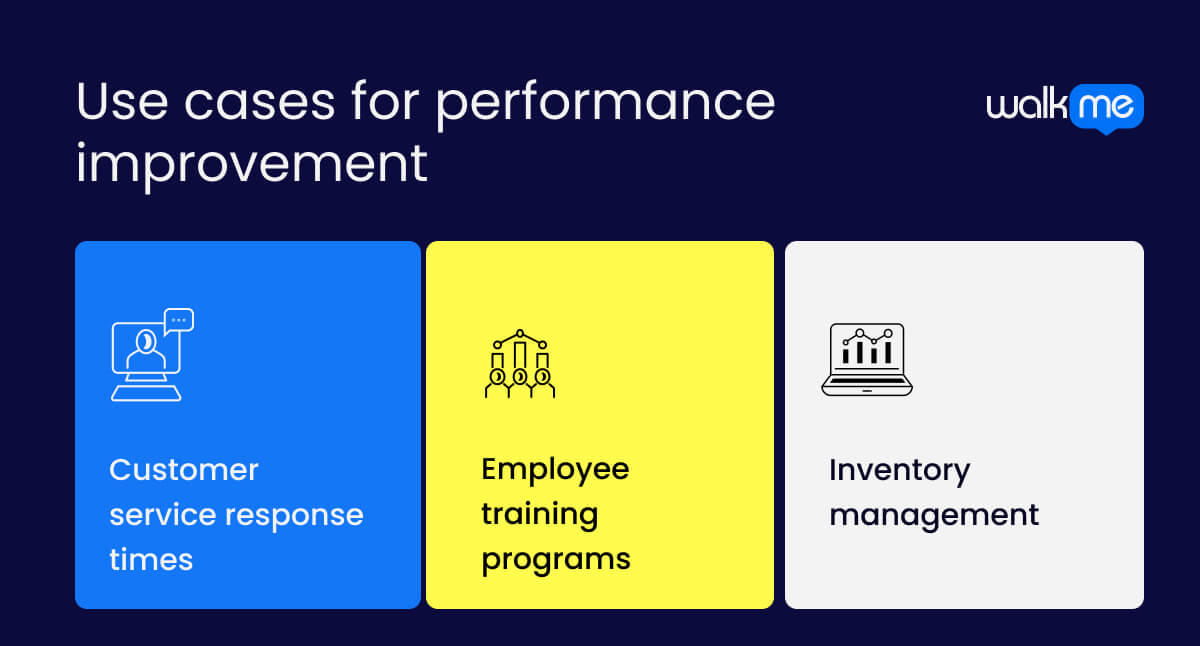
Performance improvement can happen in different parts of a business. It might be making customer service faster or helping workers do their jobs better with training.
For example, PMI helped a business to improve processes, train employees and use better tracking systems to help their client work faster, make fewer mistakes, and get better results.
Seeing how performance improvement works in real-life examples can make it easier to understand. Here are three examples to show how performance improvement can help a business.
Customer service response times
Improving response times helps a business answer customer questions faster. The company might use a system that sorts customer requests by how urgent they are and sends them to the next available team member.
With this system, workers can reply more quickly, and customers don’t have to wait long for help. As a result, customers are happier and stay loyal, and the team can spend more time-solving problems instead of organizing requests.
Employee training programs
Regular training helps workers learn new skills and improve their jobs. For example, a business could set up a program that teaches employees how to use new tools, follow updated procedures, or improve customer service.
As workers learn and practice these new skills, they can perform their tasks faster and with fewer mistakes. Over time, they also become more confident in taking on new responsibilities and solving problems. The company can work more efficiently and meet its goals with a stronger, more skilled team.
Inventory management
Better inventory management helps a business keep track of its stock more easily and accurately. The company might use software that shows inventory levels in real-time, so everyone knows what’s available and what needs to be restocked.
With this system, the business can avoid running out of popular items or buying too much stock. It saves money and makes sure customers can find what they need, making them happy and keeping the business running smoothly.
What are the advantages of performance improvement?
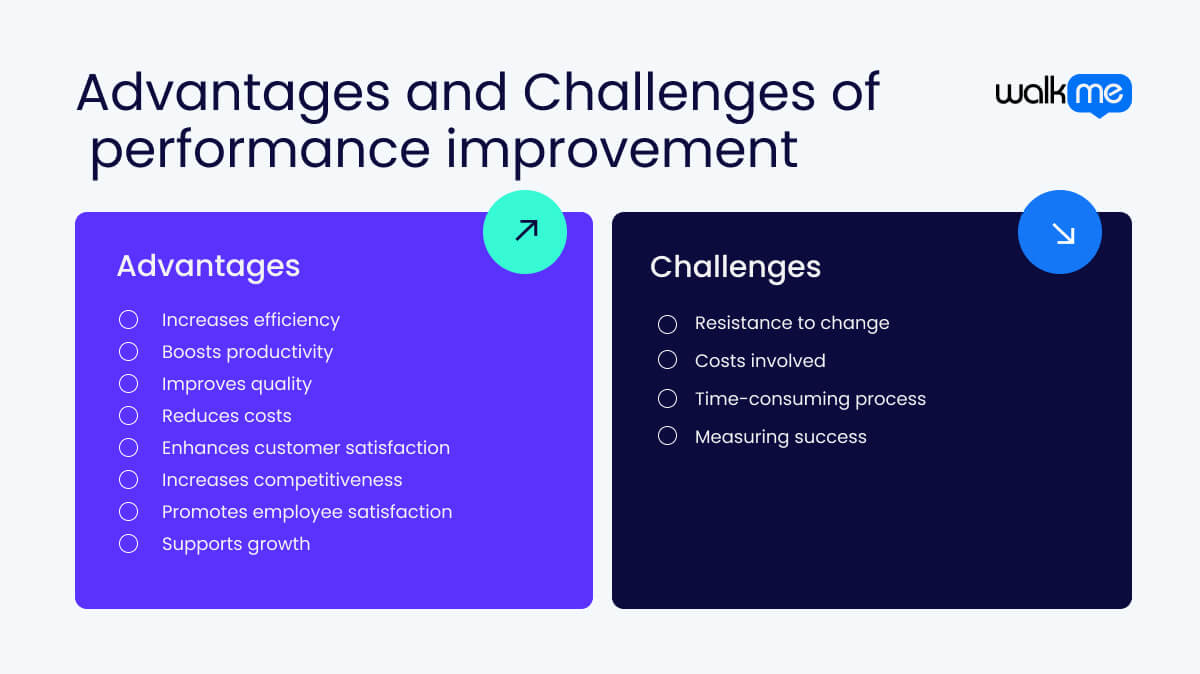
Performance improvement has many benefits for businesses. By improving how work gets done, companies can save time, achieve more, and keep customers happy. In turn, the business saves money and achieves better results.
Let’s look at the main benefits of performance improvement.
Increases efficiency
Performance improvement helps businesses find quicker and easier ways to do things. By improving steps and removing extra work, employees can finish tasks faster. It helps the business get more done.
Improves quality
Performance improvement often leads to better products or services. When employees are trained well and work processes are clear, there are fewer mistakes. The business can then provide better quality to customers.
Enhances customer satisfaction
When performance improves, customers get faster service, better products, and more helpful support. Happy customers are more likely to return and tell others about the business.
Promotes employee satisfaction
When employees have the right tools and training, they can do their jobs more easily. A better work environment helps employees feel happier and more motivated.
Boosts productivity
When employees perform better, they can do more work in less time. Performance improvements like better training or clear goals help workers stay focused and complete more tasks. As a result, the business becomes more productive.
Reduces costs
Improving performance helps the business use its resources more wisely. By doing things more efficiently, businesses can save money and avoid wasting resources. This leads to higher profits.
Increases competitiveness
A business that continuously improves its performance stays ahead of its competitors. By using resources more effectively, offering better products, and meeting customer needs, the business stands out in the market.
Supports growth
Better performance helps a business grow. When a company works more efficiently and effectively, it can serve more customers, expand into new areas, and make more money, which leads to long-term growth.
What are the challenges of performance improvement?
Now, let’s look at the challenges of performance improvement. While improving how work gets done can lead to many benefits, it’s not always easy to make these changes. Businesses need to consider certain obstacles when aiming to improve performance.
Here are some key challenges to consider.
Resistance to change
Employees may feel uncomfortable or stressed about new ways of working. Changing habits or learning new skills can take time, and some may resist the changes. Managers often need to support and motivate their teams to make improvements successful.
Costs involved
Improving performance can require money for new tools, training, or hiring experts. Smaller businesses might struggle with these costs, and even larger ones need to carefully manage spending to get good results without overspending.
Time-consuming process
Making improvements takes time. Analyzing current performance, planning changes, and training employees can slow down regular work in the short term. Businesses need patience and a plan to balance improvement work with daily tasks.
Measuring success
It can be hard to measure if the improvements are actually working. Setting the right goals and tracking progress requires careful planning. Without good measures, it’s challenging to see the real impact of performance improvements.