
What is an onsite job: Pros, cons, and comparison

An onsite job is one you do at your employer’s physical workplace, such as an office, a client site, or a job site, rather than from home. Onsite (also written on-site) means at the place itself, so an onsite role is the opposite of a remote one. Hybrid jobs mix the two.
The COVID-19 pandemic had a massive impact on the work environment, and it changed how many people weigh an onsite job against remote or hybrid work.
As a result, businesses have had to rely on new technologies to survive and have been forced to undergo rapid digital transformation and organizational change.
The ‘new normal’ has enabled flexibility for employees and helped them manage their work-life balance better. However, since many employees started to partially return to the office in 2022, organizations have been discussing how we should work in the future – on-site, off-site, remote, or hybrid.
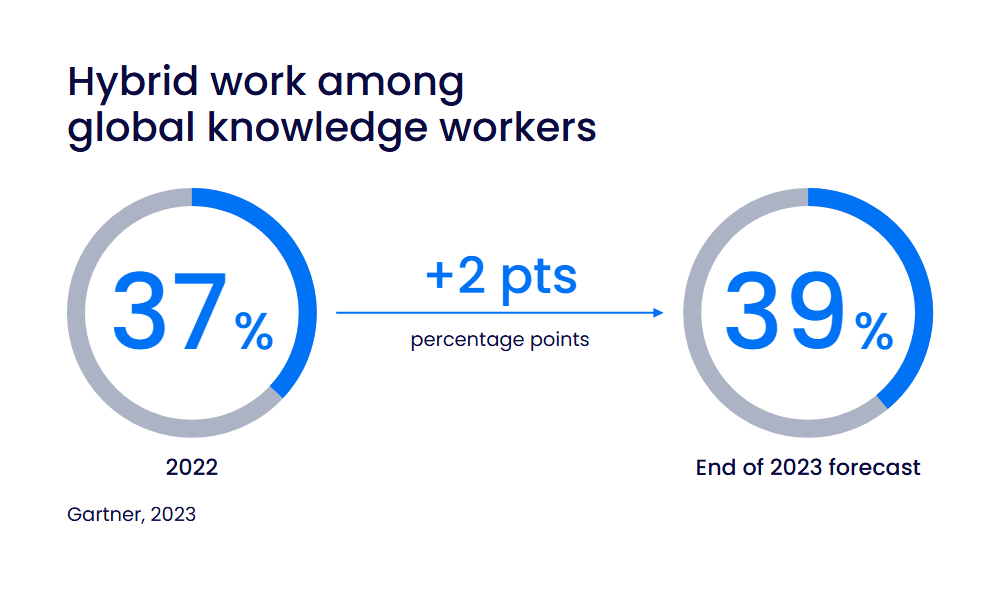
In March 2023, Gartner forecast that 39% of global knowledge workers would work hybrid by the end of 2023, up from 37% in 2022. In contrast, only 9% were expected to work fully remote.
Moving from an onsite job to a remote one, or vice versa, can be challenging if managed poorly, which is why successful change management matters during these transitions.
What Is onsite work?
Onsite work refers to a professional arrangement in which an employee works at their employer’s physical workplace, either full-time or part-time. This could mean going into an office every day, working from home on certain days of the week, or using technology like Microsoft Teams and cloud-based applications to interact with coworkers remotely while remaining based in the office.
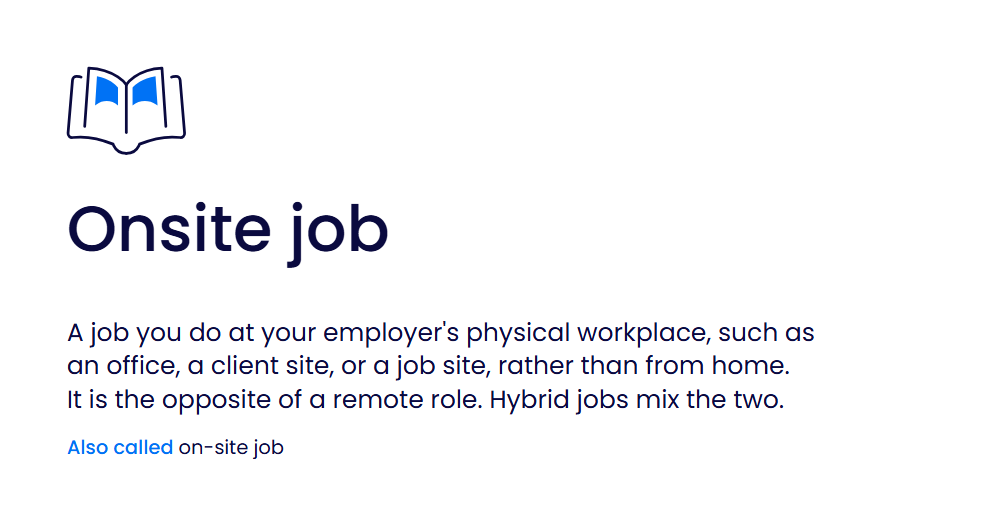
An onsite job usually involves customer service, receptionist duties, project management, software development, sales, and more. Depending on the role, it may include traveling to job sites or client meetings. Onsite work means employees are physically present on the premises during regular company hours.
This can create stability for employees, as they will likely be eligible for employer-provided benefits.
Why is onsite work considered important?
Onsite work is important to both employers and employees. Employers value onsite work because it helps them maintain high productivity, reduce overhead costs, directly oversee staff, and build cohesion in the workplace.
Employers can also benefit from offsite work in an in-person workspace that encourages team collaboration and fosters client relationships.
Employees also consider onsite work important for similar reasons. Working onsite means more opportunities to collaborate with colleagues, better access to resources, improved communication and trust between employer and employee, and more job stability.
Being physically present in the workplace also enables people to build relationships with coworkers. It gives them an outlet for networking, learning new skills, and being a part of an organization that values their presence.
Site work usually involves clear communication of expectations and tasks, including deadlines and work in different time zones and commute times. This can include coordinating with international teams or working with remote staff. Working across time zones can be challenging, as hours may not always fit the local schedule. Employers must provide clear guidance about expectations and tasks, and staff must be able to work flexibly.
Onsite job pros
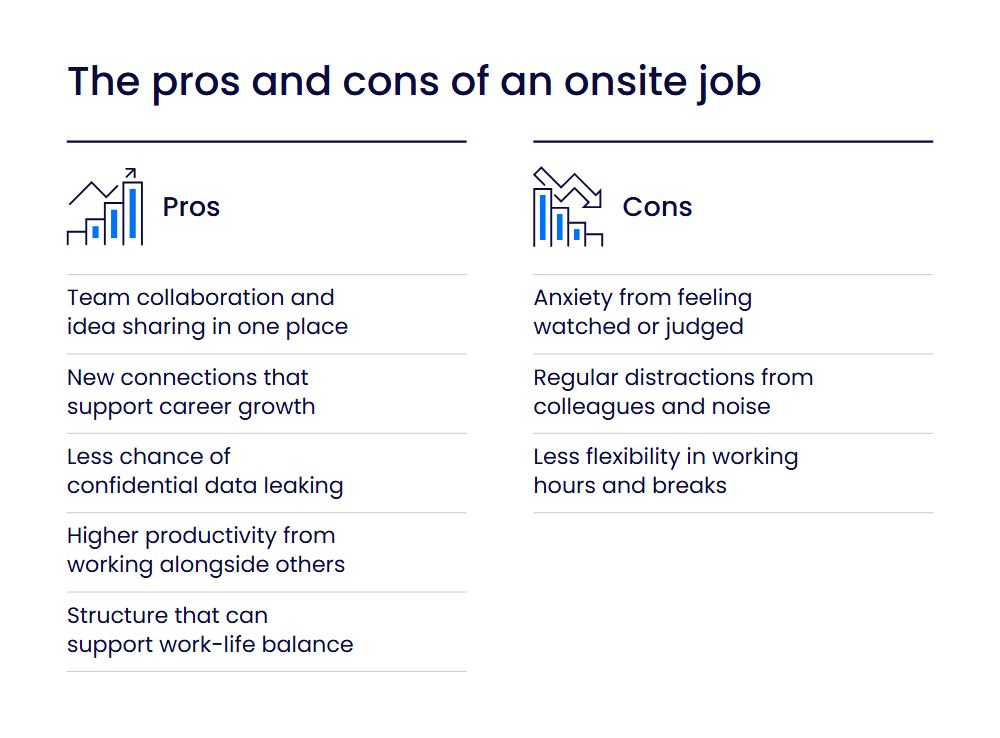
Increasingly, businesses are choosing to have employees work onsite. This offers several advantages that improve team collaboration.
These include:
- Team collaboration: Having the entire team in one physical location can benefit collaboration and idea sharing. Working onsite also helps groups build meaningful relationships that improve communication, productivity, and creativity.
- New connections: Being physically present at a workplace allows professionals to meet new colleagues and build lasting relationships. This can lead to professional growth and help you tap into resources and networks to further your career goals.
- Confidentiality: Working onsite helps protect confidential information because there is less chance of data leakage or interference from outside sources.
- Productivity: Being around others and having a certain level of motivation from being surrounded by those working diligently can lead to higher productivity.
- Work-life balance: Working onsite provides structure that can help support work-life balance. Employees have more control over their hours and workload when working onsite, allowing greater flexibility to balance their work schedule and home life.
Onsite job cons
The traditional onsite office model comes with several inherent drawbacks. Common cons of working onsite include increased workplace anxiety, regular distractions, and less flexibility in working hours and breaks. Let’s explore these potential negatives further.
- Increased Anxiety: Working onsite, particularly in an office environment, can be a source of anxiety for some employees. This anxiety can show up as feeling watched or judged by colleagues and supervisors, and feeling overwhelmed by the pressure to perform.
- Regular Distractions: In an onsite environment, it can be harder to stay focused and productive because more distractions surround you. You may spend too much time chatting with colleagues and not completing your work. Environmental distractions can also include traffic noise or even pets entering the workspace.
- Less Flexibility: Having a job onsite may mean less flexibility with working hours or taking breaks during the day, as there may be expectations to stay in the same place for a certain amount of time each day. This lack of flexibility can affect work-life balance and well-being if employers don’t manage it properly.
Onsite vs. Remote vs. Hybrid Work
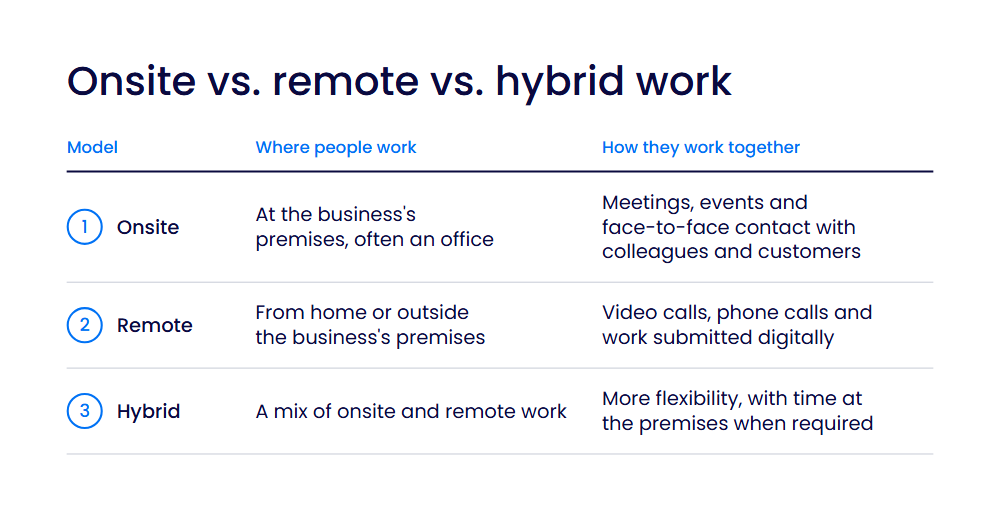
Onsite jobs mean working at the business’s premises, often in an office setting. This type of job usually involves attending meetings and events and interacting face-to-face with colleagues and customers.
Remote jobs involve working from home or outside the business’s premises. These roles typically involve communicating with colleagues through video conferencing or phone calls and submitting work assignments digitally. Hybrid jobs combine onsite and remote work, giving employees more flexibility while still attending meetings at the business’s premises when required.
These distinctions matter for employers and employees because they let businesses choose the right model for their needs while giving workers different levels of freedom and structure.
Employers can choose an onsite job if they need someone fully immersed in the culture and environment of their business. At the same time, remote workers let companies tap into global talent pools without investing in expensive office space. Hybrid models offer a unique blend, allowing employees to have specialized roles within a company while still enjoying some workplace autonomy and flexibility.
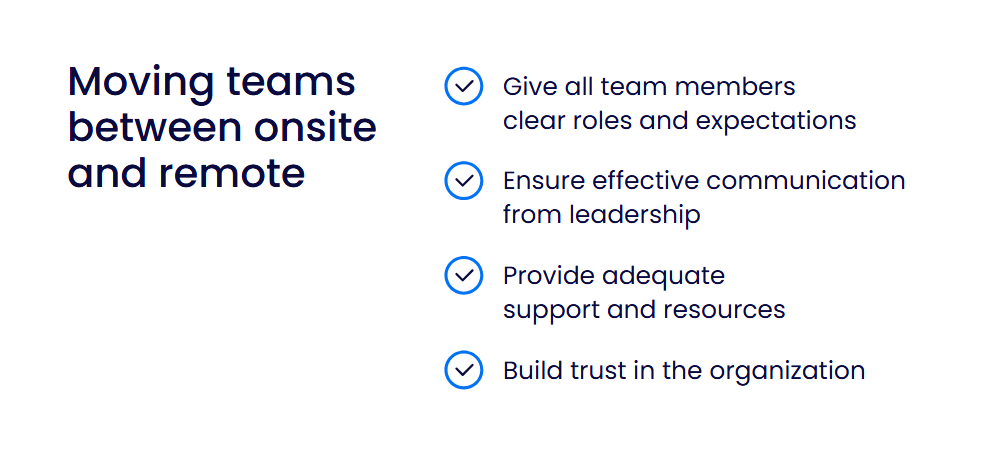
Transitions between onsite and remote work can be challenging if people aren’t managed well. Key tips for successful change management include giving all team members clear roles and expectations, ensuring effective communication from leadership, providing adequate support and resources, and building trust in the organization.
The Future of Work
With the ‘new normal’ in full swing, hybrid work seemingly presents a new, more dynamic option for the future of work. Hybrid teams bring together professionals who can work remotely and onsite, offering greater flexibility for the organization, access to a larger talent pool, and the potential for increased productivity.
Onsite work is most beneficial when face-to-face interaction is needed or when responding quickly to changing circumstances; hybrid teams can often provide those same benefits while letting employees collaborate with colleagues worldwide in real time. Hybrid teams are also well-suited for companies looking to build more diverse teams with different perspectives and skill sets.
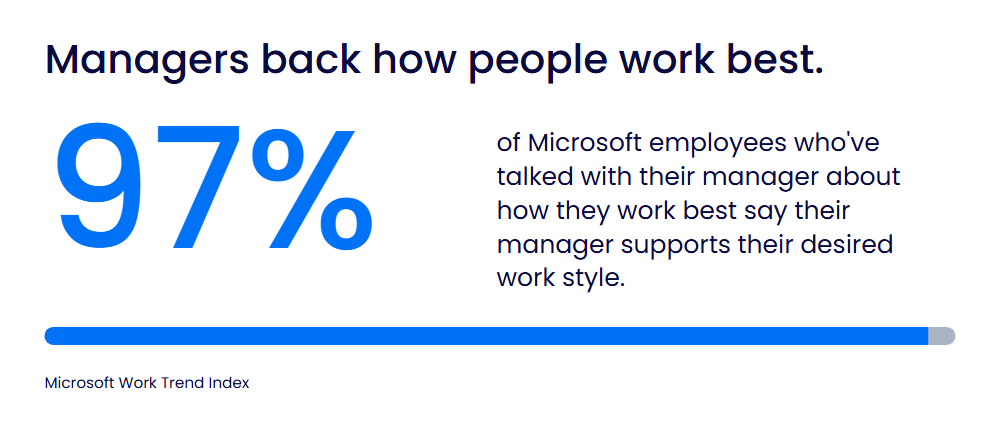
According to research from Microsoft’s Work Trend Index, 97% of Microsoft employees who’ve talked with their manager about how they work best say their manager supports their desired work style.
Companies are using new approaches that are revolutionizing the business world. This means they can be more efficient and get more done while saving money. At the same time, it lets companies benefit from new levels of innovation and offers many opportunities to keep growing and developing.
These new working models create an environment of greater flexibility, allowing businesses to adjust to the changing needs of their customer base and build a more resilient foundation. Companies can now respond more agilely to market conditions, improving performance and growth.
By leveraging the latest technological advancements, businesses can reap the rewards of faster innovation cycles and higher returns on investment. As companies navigate this new terrain, they will face endless opportunities to capitalize on these new working models and maximize their potential.
Frequently Asked Questions
An onsite job is one you do at your employer’s physical workplace, such as an office, a client site, or a job site, rather than from home. You are physically present on the premises during regular working hours.
Both spellings are used for the same meaning, and you will also see “on site” written as two words. Whichever form a job ad uses, it means the work happens at the workplace itself.
Onsite work happens at the employer’s premises. Offsite, or remote, work happens elsewhere, such as at home, with colleagues reached by video call or phone. Hybrid work combines the two.