
What is software license management?

The number of software tools is rising fast on every team, and AI automation is speeding things up. This growth has created a gap between what companies think they are managing and what they are actually using.
Without a clear system, it is easy to miss renewals, ignore compliance rules, or overpay for unused software. That approach wastes money and creates legal and operational risks. It can also slow down the rate of digital adoption as employees struggle with poorly managed tools.
This software implementation problem is widespread. A report from the U.S. Government Accountability Office noted that even the federal government, with a $100 billion IT spend, can fail to track licenses effectively and miss savings opportunities. Research from KPMG also shows that companies often overspend on cloud resources by about 35%.
Software license management (SLM) is the process that solves this. It involves managing users, controlling access, staying compliant, and optimizing costs. This article will explain what SLM is, why it’s essential, and how to do it right.
What is software license management?
Software license management is the process of tracking and controlling a company’s software inventory. This organized system helps a business follow all its complex license agreements with software vendors. Adherence to these agreements is crucial to avoid serious legal trouble and unexpected financial penalties.
A primary benefit is significant cost reduction. The company gains the ability to see which software licenses are sitting unused in a digital workplace. It can then either remove or reassign these licenses. This practice saves money that can be invested in other critical business needs.
Software usage also becomes far more efficient. The organization can ensure it has the correct number of licenses for its teams, getting the most value from its software budget. The system also ensures that only authorized users can access specific applications, thereby reducing the risk of security breaches. Operations improve because SLM automates tedious tasks like tracking and renewals. Most of all, the company gains a clear, centralized view of all its software licenses.
Why is software license management important?
Good software license management helps you stay in compliance with vendor agreements and avoid fines if you are audited. It also gives you a clear view of your software and helps you buy only what your business truly needs.
Here are the reasons why you need a software license management process:
- Allows efficient operations: Your operations become more efficient with a clear view of all your software. This accuracy reduces confusion and helps teams get the right tools quickly.
- Enables strategic decision-making: Reliable data on software use makes strategic change easier. You can see which tools deliver real value and make purchases that align with your business goals.
- Mitigates risk: The risk of security gaps is much lower with good license management. It helps you find outdated or unapproved software, reducing potential security threats.
- Lowers costs: Your company’s costs are reduced by identifying unused software. These licenses can be reassigned or retired..
- Ensures compliance: Achieving full compliance with license agreements is much simpler. Regular checks ensure your usage matches the terms and minimize the risk of fines.
What are the elements of software license management?
When companies know about the facets of software license management, they can follow the rules and avoid legal trouble, which also keeps vendors happy. It can also lower costs by eliminating waste from unused licenses and mitigating risks from shadow IT practices.
Here are the core elements every CTO should track:
| Element | What it involves | Why it matters |
| Lifecycle management | Buying, deploying, tracking, renewing, and retiring licenses across the software lifecycle. | Ensures compliance, prevents overspending, and avoids service interruptions. |
| Risk and compliance | Enforcing license limits, maintaining audit records, and blocking unauthorized software use. | Reduces legal, financial, and security risks. |
| Cost optimization | Reclaiming unused licenses, rightsizing allocations, and negotiating smarter vendor contracts. | Cuts waste and improves ROI. |
| Usage monitoring | Tracking license usage and software activity across teams and departments. | Identifies unused assets, supports better renewal and budgeting decisions. |
| Inventory maintenance | Maintaining an accurate, up-to-date list of all software, versions, and users. | Improves visibility, supports automation, and ensures alignment with business goals. |
Management of software license lifecycles
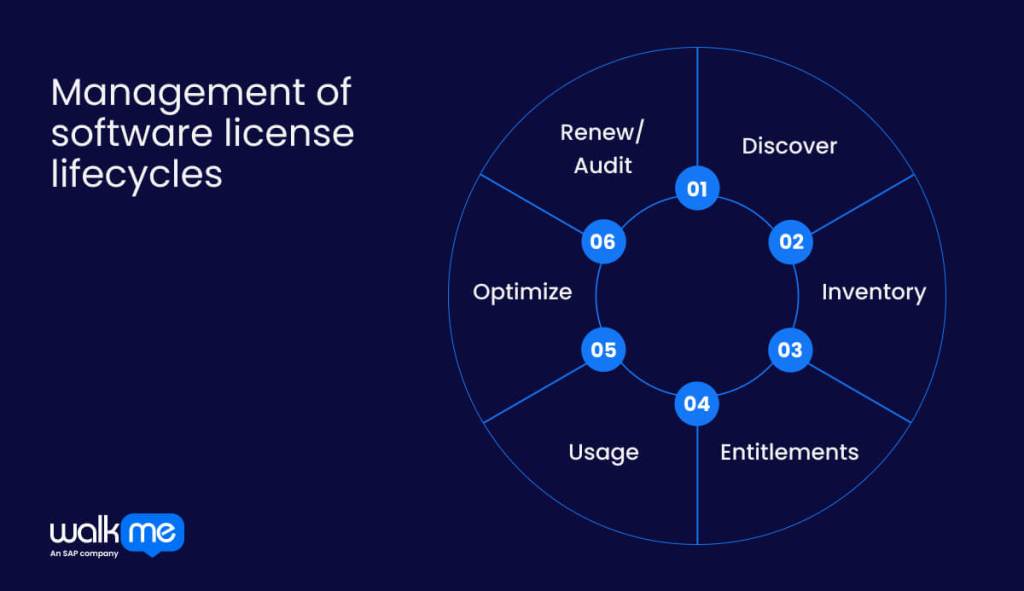
Software license management covers the full lifecycle—from purchasing licenses that fit business needs to installing them according to vendor rules, tracking usage, managing renewals, and retiring outdated software. This process ensures compliance, prevents overspending, and keeps systems cost-effective and secure.
Risk management and compliance
Effective license management includes proactive risk and compliance controls to prevent legal fines, audit fees, and security risks from unauthorized software. Maintaining detailed records and enforcing policy adherence ensures your organization meets license terms, aligns software use with business goals, and avoids waste.
Cost reduction
Reducing costs involves reclaiming unused licenses, rightsizing to match actual needs, and negotiating better vendor terms using accurate usage data. Proper management prevents non-compliance penalties, eliminates duplicate software, and supports more innovative budgeting and forecasting.
Monitoring and tracking software license usage
Tracking license usage ensures compliance, identifies unused or underused licenses, and supports strategic decision-making for renewals and purchases. A precise software inventory improves security, cuts unnecessary spending, and provides reliable data for future planning.
Inventory list maintenance
Maintaining an accurate, up-to-date inventory of all software, versions, and users ensures compliance, supports license reallocation, and prevents waste. Regular reviews strengthen security by enabling timely updates and supporting procurement decisions that align with business objectives.
What are the common challenges that software license management alleviates?
Understanding the challenges of software license management helps you avoid costly issues such as legal fines and overspending on unused software. By knowing the risks, you can create a better plan to track your licenses.
Here are the challenges you need to watch out for:
- Security issues: Outdated or unapproved software can create security vulnerabilities that cyberattackers can exploit. A lack of clear insight into software versions makes it challenging to apply important security patches.
- Waste and overspending: Unused or forgotten software licenses often lead to higher costs. Inefficient tracking can result in the same software being purchased multiple times, wasting company money.
- Compliance risks: Your company may face legal issues if software use doesn’t comply with license agreements. Complex license terms can also make it difficult to demonstrate compliance with the rules.
- Operational vulnerabilities: Incorrect software lists can slow down technical support and system updates. Manual tracking and data silos also cause work delays and problems with user access.
What are the best practices for software license management?
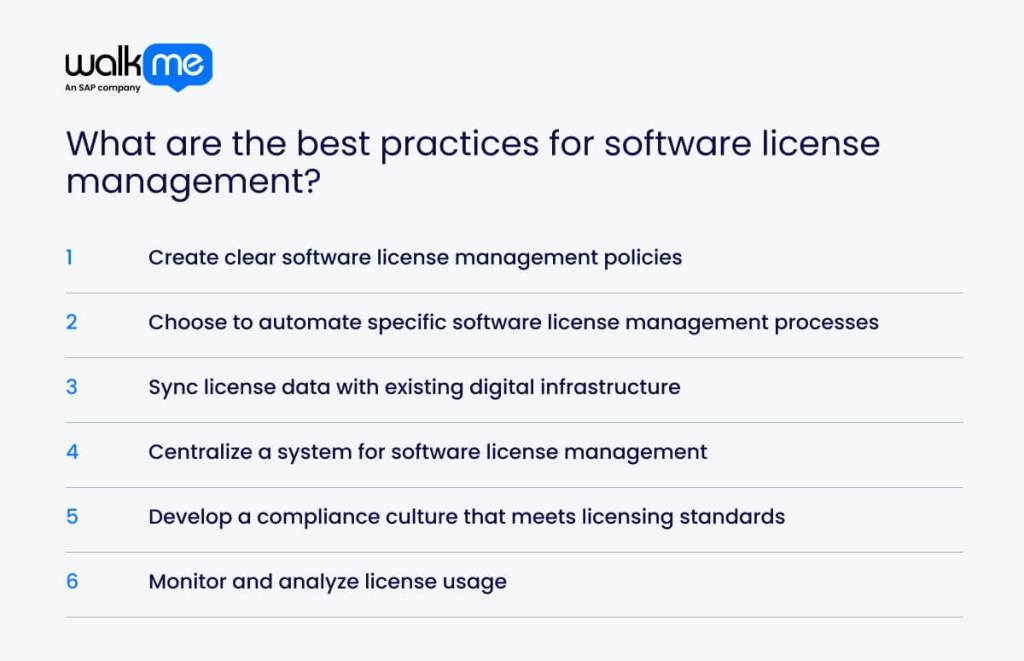
Best practices for software licensing management are essential for controlling costs, avoiding large legal fines, and improving security. They also ensure your company is always compliant with licensing rules. This makes the entire process more efficient and secure.
These are the best practices you can adopt for the implementation process:
Create clear software license management policies
To manage software licenses well, your policies should align with company goals, such as saving money or reducing risk. Start by reviewing your current process to find areas for improvement. You should clearly define who is responsible for managing software and who can approve new purchases to prevent unauthorized use.
Your business should create a single, clear policy document that outlines all the rules for buying, using, and retiring software. Finally, make sure to train all employees regularly. They need to understand the policy, why it is crucial, and the risks of not following the rules.
Choose to automate specific software license management processes
Automating various software license management processes is vital to saving time, cutting costs, and reducing security risks. By removing manual work, you free up staff and prevent expensive human errors. This can include forgetting to renew a license or failing to reclaim a license from a former employee.
A great way to begin is by automating simple, high-volume requests for standard software. From there, focus on high-risk areas where mistakes are most costly. For a truly seamless process, integrate your license tool with other systems, such as HR and identity management.
Sync license data with existing digital infrastructure
A single source of truth for compliance, cost control, and security is created by integrating your software license management (SLM) tool with other IT systems. The process begins with cataloging all licenses, from cloud to desktop, along with purchase records and contracts. Standardized procurement processes also ensure data is captured consistently.
Automated data discovery is crucial for accuracy. Your SLM tool should connect with IT systems and cloud providers to gain full visibility into your entire software estate. Automated tracking tools then find all installed software, giving you an accurate, real-time inventory.
Centralize a system for software license management
A centralized software license system provides better visibility, stronger compliance, and lower costs by automating key tasks. The process begins with a complete inventory of all software across your network, from cloud to desktop apps.
All relevant license details, such as contracts, costs, and renewal dates, must be collected for accuracy. Your license management system should also connect with procurement to automatically register new software purchases.
For management, a dedicated platform, such as a SAM or SaaS solution, is ideal. This platform needs to integrate with your existing IT infrastructure to create a single source of truth. A specific team with members from IT, finance, and legal should oversee the entire process. Clear governance rules for data entry and maintenance are essential for long-term success.
Develop a compliance culture that meets licensing standards
A strong compliance culture is built on clear software license rules. In the first instance, the license team must fully understand every agreement, from user types to renewal dates. All employees should receive regular end-user training on the importance of compliance and the risks involved. This training content needs to be tailored for different roles, such as developers and procurement staff.
Everyone should know that compliance protects the company legally and financially. Senior leaders must actively show their support to make it a priority for all. The company should also hire a compliance team to ensure that someone is responsible for managing licenses. If individuals do break the rules, there should be a process that outlines the consequences.
Monitor and analyze license usage
Effective software license monitoring helps your company comply with relevant licensing rules and save money. Initially, a central repository should track all software details, including costs, purchase records, and renewal dates.
Once you do this, an automation platform can help you discover and monitor software use across all systems. These tools also provide helpful alerts for upcoming license expirations. Regular analysis of this usage data helps find unused licenses that can be cut. Consistent internal audits can also identify licensing compliance issues before they become a problem.
From visibility to value in software license management
A strong software license management strategy gives clear control over your software and data. Centralizing clean license data shows what you own, what is installed, and what is in use, helping prevent overspending and audit issues.
Automation for discovery, assignment, and deprovisioning reduces manual errors and blocks unauthorized access. Regular reviews keep your effective license position up to date and prepare audit evidence before buying new licenses, which lowers compliance risk and waste.
Success depends on tracking results such as savings, compliance gaps, and request fulfillment time. A pilot on two high‑spend applications proves value quickly and avoids slow, error‑prone rollouts. This approach turns software license management into a strategic advantage.
FAQs
The software license management (SLM) process tracks how software licenses are used within a company. It helps the company follow the rules, save money, and avoid risks. SLM includes obtaining licenses, listing them, checking usage, adhering to license terms, using licenses wisely, and handling renewals or removals.
You can measure the success of software license management implementation by assessing cost savings and adherence to rules. Look at how many licenses are used and how many are not. Check for any risks of breaking the rules. Also, track the cost per user and your audit readiness. This helps show you are saving money and following license agreements.
Software license management tools are programs that help companies manage their software licenses. They make it easy to see how software is used, renew licenses on time, and avoid paying for licenses that are not needed. These tools also help companies comply with the rules and reduce the risk of legal or financial problems.